Enterprise Risk Management (ERM): Meaning and Types
Tue, 20 October 2026
Inspirational journeys
Follow the stories of academics and their research expeditions
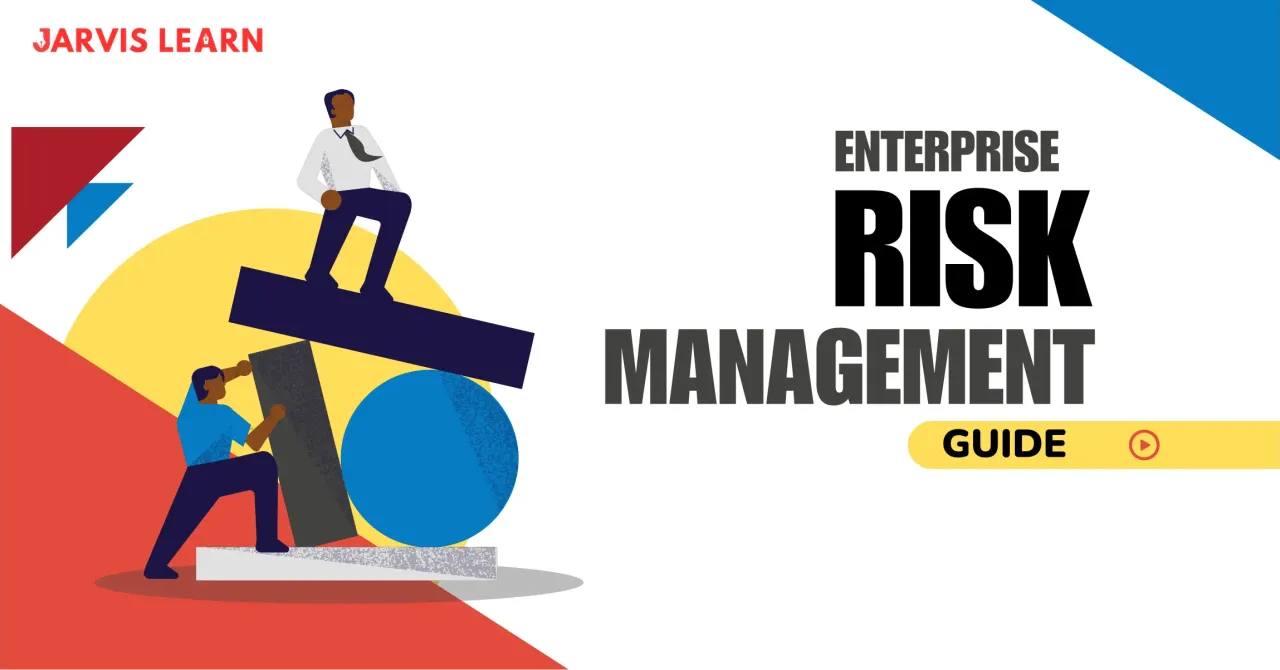
It's purely a gamble if an organization takes a step that could flip its entire trajectory without risk management. In this economy, traditional risk management works, but things evolve, and so do the risk management strategies that are being used. Now, enterprise risk management steps in to resolve the gap. ERM is a strategic approach that is now starting to be considered and implemented too.
According to NC State University News, over 69% of organizations do not implement ERM processes in their enterprise. This could be one of the core reasons why most organizations often fail. Yet the remaining 31% of enterprises have implemented complete enterprise risk management processes. Here, we are going to delve into enterprise risk management and its types, strategies, and much more.
Enterprise risk management is a risk management strategy that is used to identify risks early that occur across the entire enterprise rather than in a single department. These risks are analyzed and dealt with using a strategic approach and help keep long-term growth stable.
By using this approach, an organization can show the workforce how every risk is interconnected with all departments in the enterprise. According to the risks an enterprise faces, they plan and identify them, which puts them in a clear state to make further decisions on what to prioritize and what to mitigate. Further, they get enough clarity to deal with unexpected risks and use their resources sustainably.
Governing the organization and its tone, they should look at responsibilities and shape. The culture is in which everyone is aware of risks and integrity.
For the mission, they should define the objective, integrate ERM, and strategically plan and align their flow with the goal.
Evaluating the risk and identifying the chances of the risk happening and its impact; this also involves selecting appropriate ways to respond to the risk.
Reviewing changes in both internal and external environments. Constantly assess performance and implement positive changes in the ERM framework.
ERM reporting and collecting vital risk information. Evaluating the risk and identifying the chances of the risk happening and its impact; this also involves selecting appropriate ways to respond to the risk.
Reviewing changes in both internal and external environments. Constantly assess performance and implement positive changes in the ERM framework.
ERM reporting, collecting vital risk data, and sharing the entire deliverable with the organization through proper communication is a crucial component of ERM.
ERM promotes the organization's preparedness by providing the necessary measures and effective resource management practices that should be used in case of a risk.
Once the team knows the risks that the organization will face, they will be able to take accurate actions to respond to them.
ERM helps in finding the potential adherence gaps that an organization has towards high-risk legal issues that could cost them a huge sum of fines or compensation.
This is more important for heavy industries that rely on law and formal regulations, like finance, healthcare, and energy industries.
Following a particular ERM framework often helps in identifying risks that could slow down progress. Along with that, it also helps in finding ways and opportunities, and even risks that affect the overall goal.
Strategic goals may be set correctly, but risks will always be there. ERM makes sure that everyone is aware of the risk and acts accordingly.
Solving risks, talking about them, and conducting brainstorming among the workforce costs more of their resources. Implementing enterprise risk management eliminates all these things by identifying and showing what issues may arise.
This reduces costs and improves efficiency and most likely saves a lot of resources and energy they put into managing the risks.
Enterprise risk management practices create a positive culture where everyone understands risk in the workplace and works accordingly.
ERM also provides resources to create a positive culture around the risks and creates an effective risk-managing environment.
Enterprise risk management is done to provide organization-wide management regarding risk and apply the framework with the aim of identifying, assessing, and managing the risks that arise in any department around the entire enterprise.
Setting clear objectives and managing risks for the entire enterprise is the actual goal in the enterprise risk management framework.
There are multiple enterprise risks that are listed. These risks are usually managed separately in traditional risk management, and the types of risks are as follows:
These are widely considered the major areas of risk in the entire enterprise. In enterprise risk management, these risks are dealt with as a whole, and a response is taken to address the risk.
There are some frameworks in ERM that organizations implement in their workplace, which are approaches using enterprise risk management tools to manage the risks as a whole. Every framework is different and focuses on risk management from different angles.
This is a framework that's developed by the Casualty Actuarial Society, which focuses on identifying and managing risks in the organization. This framework's outcome represents how the risks across the organization can affect the performance and the objectives of the company.
The COSO framework is designed to help organizations connect strategy with risk management, objectives, and overall performance. It helps the organization assess risk, choose a risk response, manage the risk, and take proper management measures. The core purpose of this COSO enterprise risk management framework is to make everyone aware and take approaches that balance risks.
ISO 31000 risk management is considered an international standard framework that provides a complete guideline for managing enterprise risk in an organization. This ERM risk management framework follows a method that helps to identify risks, analyze, evaluate, and even pick the right approach for the particular risk. This is widely used because it is more flexible and feasible in many organizations of any size to make general decision-making more efficient.
ISACA developed this COBIT framework, and it focuses on the management of the enterprise’s IT. It is primarily focused on managing technology-related risks and keeping information safe. This COBIT framework is for organizations that rely mostly on technology and systems.
Considering the ERM frameworks and process, NIST (National Institute of Standards and Technology) developed this framework to combine cybersecurity and IT risk and to take them into account with the overall risk of the organization. This framework is used in identifying, assessing, and prioritizing risks in the business. Organizations that prioritize cybersecurity will implement this framework in their enterprise.
The RMM is created by the Risk and Insurance Management Society. This was developed to improve organizations’ evaluation of their ERM programs.
Identifying weaknesses and developing improvements is also a part of this framework; the organization will have a clear idea of how and what effective risk management practices should be followed.
|
Enterprise Risk Management |
Traditional Risk Management |
|
|
Approach |
Risk management is taken as a whole and approached enterprise-wide. |
Segregates departments and focuses on risk individually |
|
Scope |
Covers all risk types, including financial, operational, and tech risks. |
Focuses on specific risks, such as financial losses or operational failures. Focuses on a particular risk at a time, e.g., financial loss, failure in production. |
|
Decision-Making |
Considers business decisions and acts accordingly, and does the risk assessment. |
Handles both decisions and risks completely separate from one another. |
|
Risk Examination |
Examines risks and evaluates how everything is interconnected and affects the entire organization as a whole. |
Does every evaluation occur individually, and does examining risks have nothing to do with other departments? |
|
Objective |
The objective mainly revolves around balancing risk management within the organization while also considering long-term goals of the enterprise. |
Focuses mainly on eliminating the risk and controlling it to get the risk out of the particular department. |
Identifying risks from both internal and external sources is imperative. Management should take care of strategic risk, operational risk, financial risk, and even compliance risk and identify the risks that arise.
Analyzing how much a risk can impact the organization is also one of the key steps. Quantify the risks and use metrics to analyze the seriousness of the risk.
Choosing how to respond to a risk falls under 4 sections.
Taking action and assigning clear responsibilities and managing financials and resources for the respective risk. Doing this and implementing it into the workflow is another key thing one should consider.
Keeping an eye on KRIs—Key Risk Indicators—and tracking risk profiles and controls in real time. Reporting the information and data to the higher authority should be consistent.
Taking the approach in the right manner by analyzing the risk and taking a strategic approach after a clear analysis. Overall, making a clear analysis and approaching it precisely is better for managing risks.
Being transparent about the risk and showing every department what the entire organization is dealing with. By doing this, the organization will have better coordination and communication to resolve the risk rather than letting it become a bigger risk.
Every department and workforce being accountable is more important; thus, allocation of resources and responsibilities should be clear to everyone, and so should the allocation of risk throughout the organization.
Implementing ERM with continuous monitoring is another strategy that gives enough flexibility to change and adapt to different risk environments.
The Enterprise Risk Management Program is designed to regulate and control risk within the company. This ensures compliance with the objectives and supports systematic approaches and accountability.
This enterprise risk management system needs a skilled workforce and leadership to take ownership of these frameworks. It requires constant communication and ensuring all departments are actually taking steps to implement risk measures and mitigation steps in their own department.
The enterprise realizes that ERM frameworks are actually effective for it by assessing the metrics. The core metrics that ascertain the efficiency of an enterprise risk management model are risk recognition, mitigation, and response to the risk.
Monitoring ERM is also effective in spotting gaps for improvement, boosting risk management competencies, which generally makes risk management much stronger.
Some practices are done along with implementing ERM frameworks in an enterprise, which are as follows:
Having a strategic approach and linking risk management to objectives. Setting clear boundaries and a ceiling on the level of risk an enterprise can endure.
Staffing a proper chief risk officer to take on dedication and accountability for every strategic risk management step.
Proactively interact with other teams to keep cross-functional communication consistent to face unexpected risks. After that, use data and combine it with key risk indicators to identify potential risks. Keeping the team proactively seeking and assessing risks to mitigate will help manage risks early.
Plan the appropriate response for each risk at a time. As we already saw, it only comes down to avoiding, mitigating, transferring, and finally accepting the damage the risk is bringing to the enterprise.
Be straightforward and use simple language and terms so that workers and stakeholders understand things clearly. Keep the culture steady by revealing and proceeding with ERM management practices slowly rather than overwhelming the workforce by dumping numerous risks at the same time.
The entire concept of enterprise risk management is required for organizations to identify risks and actually deal with, mitigate, and minimize their impact. Decisions and the decision to take proper measures are made in the process of enterprise risk management.
An organization that is taking a step above will look forward to implementing a properly structured ERM framework, which in turn gives the organization better risk visibility and risk management awareness and achieves long-term stability. To become an expert, developing oneself through relevant courses and certifications can help professionals move forward in their risk management careers.
The four pillars of enterprise risk management are risk identification, response, monitoring, and communication.
Getting a certification in ERM risk management and becoming a risk management professional is worth it if you are pursuing a career in risk, climbing the ladder of risk management, and pursuing work in a larger risk-related industry.
Qualitative, quantitative, semi-quantitative, generic risk assessment, site-specific risk assessment, asset-based risk assessment, and vulnerability risk assessment.
ERM is a framework for risk management in an enterprise, while ERP is software that automates daily business operations.
Shaping your skills related to risk management promises a good future in a risk management career if you upskill as a properly certified enterprise risk manager.

Tue, 20 October 2026
Fri, 28 August 2026


© 2026 JarvisLearn Inc. - All Rights Reserved.