Google Ads strategy: What is it, and how do you build one?
Fri, 06 November 2026
Inspirational journeys
Follow the stories of academics and their research expeditions
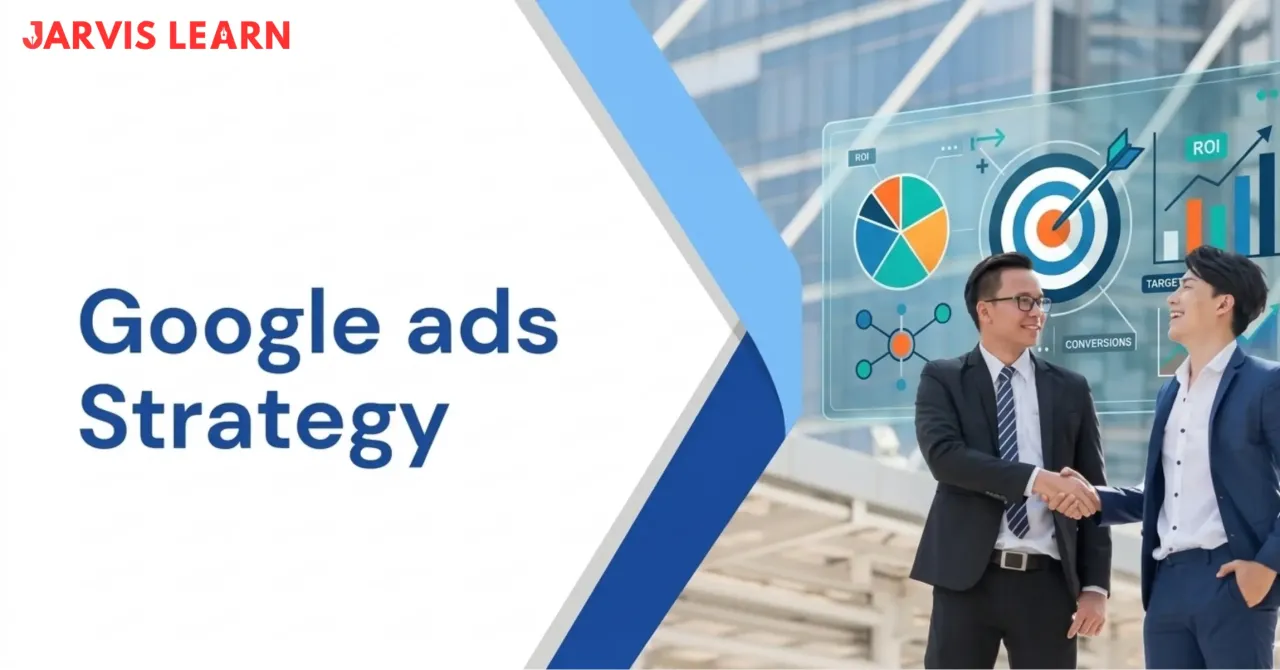
Google Ads is one of the most efficient ways of marketing for businesses, but utilizing Google Ads without a clear strategy is like going through a process that has no destination. You will burn the budget and effort and finally end up somewhere that is not in the plan. There are a lot of advertisers who launch a few campaigns, do some keyword research, and have a good budget, then hope for the best results. After that, they start to wonder why the engagement isn't high and why the leads never even come in.
But if you have a clear Google Ads strategy, this can be fixed. A good strategy will get you to take control over Google Ads and measure and scale it entirely. Here, we are going to take a walk around what a Google Ads strategy is and what the benefits, tips, and challenges are for one business.
A Google Ads strategy is a strategy that is framed by businesses to reach goals through running Google Ads on Google's advertising platforms. Here, a strategy is followed where things like how you will reach the customer, how you will measure the results, and more are considered. In simple terms, a Google Ads strategy will answer things like
These are some answers that confirm the strategy is effective. Otherwise, optimization becomes something that runs on guesses. With them, every change you make in the Google Ads strategy has a purpose.
Google Ads strategy is designed to get immediate results and visibility, as it works faster than SEO. SEO takes time to deliver results. Here, Google Ads will reach the customer immediately without waiting for months and weeks to build organic traffic to flow into the website.
Targeting becomes much better, and you can funnel the targeting based on intent, because Google Ads will always reach the customers who are already searching for products and services. Targeting can be done with relevant keywords and the location and preferences of the customer; this gives better clarity in targeting the customer for the business.
Google Ads strategy gives the business better control over the budget because the business is only charged when the user clicks on the ad. This gives the business more flexibility over the budget for Google PPC marketing.
Most of the time, the user who has already visited your page might not make a purchase. Using a Google Ads strategy, you can reconnect with the previous audience, who can be a potential customer.
Performance measurement is another thing that goes smoothly when there is a good Google Ads strategy. A business can monitor clicks, impressions, and everything else and act according to the metrics in the future.
A business should use Google Ads (Google PPC advertising) in conjunction with SEO to improve their ranking and brand visibility. Using Google Ads will help you understand what is working and what isn’t. You will understand where your gaps are and create content that will match what your audience is looking for organically.
Set clear business goals and set them for what you need and what can be achieved through a Google Ads strategy. Know the actual potential of your strategy and set the goals according to it. Then set targets like CPA and ROAS. These things are used to evaluate performance and track Google PPC campaign performance.
Have precise conversion tracking to understand how effective the ads are. Track it through Google Tag to find important activities like purchases and form submissions. You can even have a track over phone calls and conversions that happen. This should be tested and monitored to make sure it's recorded and to know that the campaigns are optimized well enough for results.
Do the deep keyword research and place the ads based on the search intent of the audience. The business should target the keywords that their competitors do and also eliminate keywords that are not relevant for the target customer.
Target your keywords perfectly to match what people may be searching for to make a purchase. Words like 'buy running shoes near me' will often have a higher purchase intent. Choose the keyword that has higher intent; this helps you filter out multiple users who are not your potential customers and will save budget.
Selecting the right bid strategy. Your bid strategy should match your campaign objectives. Initially, you’ll want to focus on increasing clicks to bring you more relevant traffic to your website so that you can gain insights into your performance. Once you’ve done this, you can look at using a bid strategy that focuses on conversions. From here, you want to make sure your spend is under control and use automated bidding to ensure your budget will help meet your ultimate objective.
Landing pages are the final step, and that's exactly where leads and sales usually happen; the ad must direct users to the landing page, and the landing page must align with the content the ad promised the user before clicking. The landing page must be good, fast, and easy to navigate and should contain a CTA and options to contact the business for further procedures.
Align the Intent: Prioritize intent that is commercial or transactional keywords, because if you use broader keywords, you likely end up covering a broader audience who are not going to convert but cost you more.
Using match types wisely: Maintain exact phrase match modifiers to keep it relevant, and only use broad informational queries with smart bidding.
Bidding Strategy: Manually setting CPC and maximizing clicks at the beginning is good, and it gets better conversions.
Test major shifts: Do testing and run Google Ads for at least two weeks before sticking to a particular strategy.
Match landing page intent: Always make sure that the user lands directly on the landing page that answers the promise of the ad. Make sure the landing page is fast and easy to navigate, and the landing page should include better CTAs and testimonials.
Track real business outcomes: Track the entire progress by setting up proper conversion tracking to make future decisions properly. This gives you an idea of which one drives actual revenue rather than clicks that do not convert.
If the tracking isn’t working correctly and the phone call/conversion can’t be measured accurately, smart bidding will be optimizing based on incorrect signals. As a result, your entire budget will be wasted when placing ads for your business.
Using a broad range of keywords with no negative keywords will result in receiving irrelevant clicks. This will also cause your budget to be wasted.
Customers won’t even bother to look around your landing page if you have an increased bounce rate and slow loading speed. While the advert may be enticing to your customers, getting a good landing page is difficult.
The more competitive and niche-specific a product/service is, the higher the CPC rates will be. This will require more specific audiences. Sometimes different audiences will be targeted with better quality scores and long-tail keywords.
A full-fledged Google Ads strategy always helps the business turn its advertising budget into measurable results. Setting clear goals and targeting the right keywords and keeping an effective Google Ads bidding strategy with a good landing page plays a big role in campaign success.
There are many issues businesses face today, including high CPC and increased keyword competition. However, having a good advertising strategy can solve this. Instead of focusing on getting clicks, you want to get clicked by the right people and convert them. This will lead to sustainable business growth.
A Google Ads strategy is a plan that helps the business to reach customers using paid
traffic. This is done by targeting the right people and keywords, allocating budget,
and optimizing the content to meet the business objectives.
The amount of money you spend on Google Ads completely depends on the industry.
niche, and goal. You can set a realistic amount each day for the ads; after you start
Getting leads, you can spend more on the best ads and the best keywords that are
working for you.
You should choose keywords that your potential customers are using to search for. You
should use high-intent keywords, relevant keywords, long-tail keywords, and negative
keywords.
ROI totally depends on the keyword you target, the quality of the ads, and the experience.
The landing page is given to customers who are trying to make a purchase.
Once your Google Ads are running, you should start getting traffic on your website.
relatively quickly. However, it will take some time before your campaigns are generating
consistent, profitable results. Give yourself a little bit of time to really get cracking and
start gaining good-quality data, experimenting with different tactics, and optimizing your
campaigns.

Fri, 06 November 2026
Thu, 05 November 2026

Wed, 04 November 2026
Tue, 03 November 2026
Mon, 02 November 2026
Fri, 30 October 2026
Thu, 29 October 2026

Wed, 28 October 2026
Fri, 23 October 2026
Wed, 19 August 2026


© 2026 JarvisLearn Inc. - All Rights Reserved.