Google Ads strategy: What is it, and how do you build one?
Fri, 06 November 2026

Inspirational journeys
Follow the stories of academics and their research expeditions
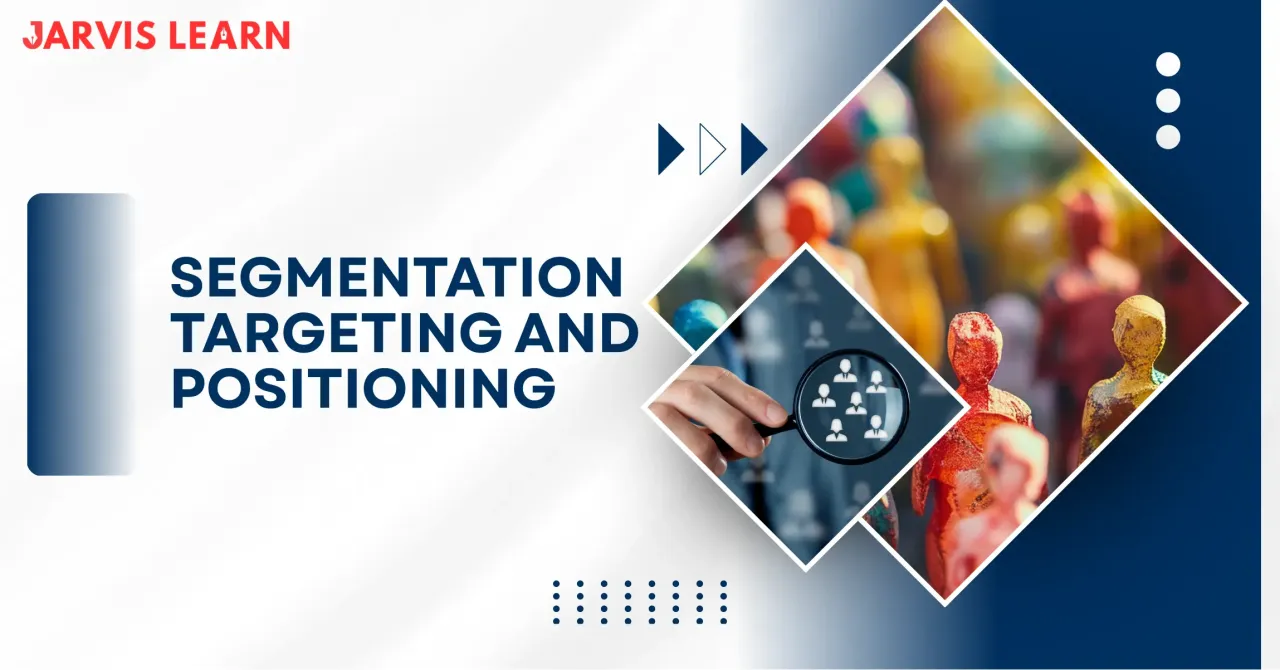
As of right now, in the market and its competitiveness, no business can stand out to all customers by conveying the same message or product. A business needs to understand customer needs to identify the right audience, segment them, and build a strong brand around those customers. Segmentation, targeting, and positioning (STP) steps in right here to change the entire marketing of a brand. According to McKinsey’s overview, better STP marketing improves 5-15% of revenue lift and also increases the ROI by 10% to 30%. The whole point of STP marketing is to divide the market into several segments, choose the most relevant audience, and showcase their products to the customers to build a brand identity.
The segmentation, targeting, and positioning definition revolves around a marketing strategy that helps the business find customers who understand their needs. The marketing STP process consists of three steps, which start with separating the market into groups based on certain things and then selecting the particular set of customers, which is the target customer for the product or service. Then the business moves to create a personalized product or a brand that targets that segment and positions it before the audience to create long-term brand visibility and trust.
The segmentation, targeting, and positioning marketing model enables marketers to go forward in making marketing campaigns that specifically focus on a specific audience. By having such a specific audience, one business can understand their preferences and behavior. Which helps them focus on working on the products and services that the specific audience expects. For example, an athletic brand might develop their products based on age, gender, and body types; the usual target customers will look for solutions like athletic wear for women.
Segmentation is the first process of the STP marketing strategy; here, it is the process of dividing the customers into smaller groups based on similar characteristics, needs, and preferences. This helps companies develop products that are relevant to the particular segment and create campaigns for the customer groups.
Demographic Segmentation
Demographic segmentation is a segmentation in which target audience customers are divided based on age, gender, education, income, and occupation.
If a company is selling premium watches, it will always segment the customer base based on high-income professionals; on the other hand, a toy manufacturer always targets parents with children.
Just as customers are segmented based on demography, here the customers are segmented based on where they are located. This could be their current location, their country, region, and city.
A sweater brand might only focus on people in winter regions to maximize their sales; they do not target any warm regions, as it's a complete waste of marketing budget.
Psychographic segmentation is where customers are chosen based on their hobbies and interests. A fitness brand will always try to target the people who are highly health-conscious and lead an active lifestyle.
Behavioral segmentation is where customers are segmented based on their habits, product usage frequency, and more.
The second stage includes targeting in the STP marketing model; this involves evaluating the market segment and selecting the particular group, which is called targeting.
Not every segment will be suitable for the business after the segmentation. Marketers must always consider the segment size, purchasing power, and more to even consider that segment for targeting.
This is a targeting strategy that treats the whole market as one audience and uses a single approach for all the customers.
Differentiated targeting means having multiple segmented groups, and creating a unique marketing strategy for every segment is called differentiated targeting.
The concentrated targeting method is a method where a particular market segment is chosen, and the business's marketing efforts only focus on a specific audience who has a particular need.
Micromarketing focuses on a small group or even individual customers and targets them with personalized service; selecting the right customer will save budget and time and use it more efficiently.
Here comes the final stage of the STP marketing model; here, the business creates a unique, appealing image or an advertisement of its product or brand in the minds of the target customer.
Positioning should be good enough to convey to customers that choosing their brand over another brand is worth it. It highlights how the product stands out and the benefits of the product.
Price-based positioning is always about affordability and competitive pricing. It's about positioning the product or service based on the price.
Positioning the brand based on the quality of the product and the service the business provides. The durability and the quality of the raw products may decide the quality of the product.
This positioning always targets a specific problem where only a few benefit from the solution the business is providing. Positioning it in front of people who have such problems is called benefit-based positioning.
Competitor-based positioning is a brand positioning where the advantages and upgrades are highlighted in the positioning to prove to the customer that they are outperforming their competitor.
Here, lifestyle-based positioning is a positioning type when a brand starts to focus on the person's interest and gives the product that connects with them.
The way a brand positions itself is one of the important elements in STP marketing; by doing positioning properly, the business will know its value and the way it approaches customers
Understanding the customers is one of the benefits the business gets; they understand their preferences and motives. Those details are then used to make it easier for the business to develop products and services for the specific customer's needs.
Creating more effective marketing campaigns can be done by focusing on the audience; this improves the probability of attracting the attention of the public and increasing customer engagement.
Using their marketing budget in the best way possible through STP marketing, which saves their marketing budget instead of spending money on traditional marketing, segmentation, targeting, and understanding the customers, is one of the benefits the business gets; they understand their
preferences and motives. Those details are then used to make it easier for the business to develop products and services for the specific customer need.
Differentiation is what makes the business stand out; STP marketing helps businesses stand out from their competitors. By doing this, it provides a good reason to choose the brand.
Higher customer satisfaction is another benefit of following STP; when customer expectations align with the product or service, there will be higher customer satisfaction.
An effective segmentation, targeting, and positioning marketing strategy is built by doing a lot of research and careful decision-making, with constant evaluation of the entire strategy.
Market research is the initial step in building an STP marketing strategy; the business should do comprehensive research and collect all the data about the customers. This includes demographics, behaviors, and expectations. By doing this research, the segmentation, targeting, and positioning strategy will be completely formed without any gaps.
Segmenting the market into groups by demographic information and behaviors is done to divide the market into smaller groups.
Fix segmentation guidelines and criteria that align with the product or the service your business provides. The segments should be identifiable and measurable at all costs.
After the segmentation, find and evaluate every segment based on the size and potential one segment holds. Then select a particular segment and deliver meaningful value and achieve the objectives.
Depending on your strategy, you can select many segments and evaluate them to target them.
Identify the Unique Selling Proposition (USP) and strengthen the positioning strategy by communicating the advantages and the benefits you provide through the products. The product positioning should be very strong in the minds of your audience.
Creating an STP strategy needs a targeted marketing mix; the marketing mix is explained below:
Optimizing performance by measuring the STP marketing strategy is the last step in the process. The business will always have to check the sales and conversion rate and should be aware of sales growth all the time. This is to find if there are any patterns and find the areas to improve.
Businesses may encounter many common challenges in STP marketing while implementing it:
Bad data collection and incorrect assumptions will always lead to results that are unfavorable for the business. The business should always be careful about segmentation, and the research should be done carefully.
After choosing a group to target, the targeted group can be wrong and may not eventually generate the expected income and may even sometimes misalign with company expectations.
If the market is separated into groups and targeted flawlessly, sometimes the brand positioning may go off track. A business should have meaningful product positioning and uniqueness to deliver what is conveyed.
The market itself is constantly changing, and the customer expectations and the habits of the purchasing pattern change over time. Companies must regularly take a look at this, do research, and adapt to keep their market STP strategy effective.
Smaller businesses will always lack the budget for STP marketing; they also lack the expertise and technology to research all the fields to understand and run the advertisement. The most promising audience and testing strategies should be prioritized to overcome these challenges.
This entire STP concept of marketing segmentation, targeting, and positioning gives a clear approach for the business to understand the customer. The strategy starts with segmenting the market and the consumers, then finding the right segment to target, and then positioning the brand to build trust and a reason to choose the brand for the long term.
When a business combines all these three things with a proper STP strategy, this can be executed, which builds a strong customer relationship. These procedures and adapting to the strategy help the business to grow even more.
STP stands for segmentation, targeting, and positioning in marketing. It's a marketing model used to build a distinct brand position for the business by positioning and segmentation processes.
The four types of market segmentation are demographic, geographic, psychographic, and behavioral segmentation.
STP marketing strategy is important in marketing to create marketing campaigns that directly align with a particular segment of consumers in the market.
A skincare company will segment the market by skin type and more and decide to create a product based on the skin type and offer the product to the targeted customer.
Segmentation is dividing the market into groups. Targeting refers to the specific group from the segmentation that you are going to target. Positioning refers to how your business will present its products to the targeted customer.

Fri, 06 November 2026
Thu, 05 November 2026
Wed, 04 November 2026
Tue, 03 November 2026

Mon, 02 November 2026
Fri, 30 October 2026
Thu, 29 October 2026

Wed, 28 October 2026

Fri, 23 October 2026

Wed, 19 August 2026



© 2026 JarvisLearn Inc. - All Rights Reserved.