7 Steps in Creating an Email Marketing Strategy
Fri, 20 November 2026
Inspirational journeys
Follow the stories of academics and their research expeditions
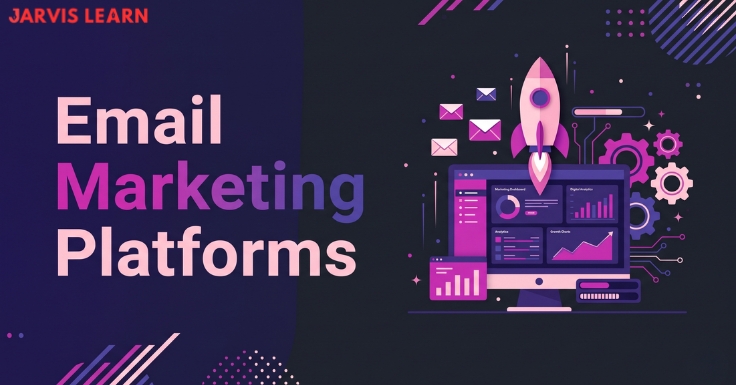
Email marketing is still one of the most effective digital marketing strategies followed by many businesses, from startups to large-scale businesses. A simple marketing campaign or a newspaper can build better customer relationships and generate leads and also increase sales and conversions. But how does a business manage all the email campaigns, the contacts, and what to send to whom? That's exactly where an email marketing service provider comes in.
There are tools on the market that help businesses automate campaigns and also track the results those emails bring to the business. Here, a business may get confused about which platform to choose to start their email marketing journey. Choosing the right one will elevate the engagement and value for their business. Here, we are going to take a look at the 10 best email marketing platforms and which one suits your business better.
An email marketing platform is software that can be used by businesses to design, send, manage, and measure their email campaigns. Many features are provided by email marketing platforms, including creating templates, managing contact lists, automation, segmenting your audience, and measuring your performance.
Businesses can use it to send marketing emails, newsletters, product updates, and personal messages. When a business requires automation, it cannot do everything manually and keep up with the process; it can use email marketing platforms to manage all email campaigns for a large audience. The business can also track key metrics such as open rates, CTRs, and conversions.
When your business scales and grows, you will have more customers and more email contacts. That's when things get tricky; you need automation to manage these contacts. A good email marketing platform will ensure you can manage your contacts and email campaigns. They help reduce repetition using automation, which saves time and helps ensure you're consistently communicating with your audience.
A marketing automation platform helps the business make informed marketing decisions. It will let the business know the analytics and allow the marketers to know about their subscribers' behavior. Those tools also have segmentation and personalization features that help the business to convey the right message to the right audience to improve engagement.
There are key benefits of an email marketing platform; businesses require such automation to improve their marketing performance and maintain stronger customer relationships.
Here are the 10 effective email marketing platforms that every business should consider before getting started with email marketing. Based on the features, pros and cons, and pricing, you can get a clarity on which platform will work the best for your business model.
ActiveCampaign is a cloud-based CXA platform that is used for marketing purposes; this includes email marketing, CRM, and even multi-channel messaging. ActiveCampaign is special for its visual automation builder with deep branching and predictive AI, which allows marketers to make personalized messages through email platforms, SMS, and WhatsApp based on segmentation.
|
Pros |
Cons |
|
Better email deliverability |
Not cost-efficient |
|
Easier and free migration from your previous email platform |
It takes time to learn advanced features. |
|
Built-in CRM sales automation tool |
|
|
Better automation with several templates. |
Omnisend is an email and SMS marketing automation platform that is specifically built for e-commerce brands. This platform is used to boost sales and customer retention; they automate emails to remind customers about shopping carts, and recommendation emails will be sent too. The unique thing is that this platform blends email, SMS, and web notifications into an omnichannel workflow that works well for many e-commerce marketing platforms.
|
Pros |
Cons |
|
Fast customer support |
Basic Analytics and Testing |
|
Flexible customer segmentation |
Contact-based pricing |
|
Affordable |
|
|
Omnichannel Automation |
Brevo is an all-in-one digital marketing platform that is also a CRM platform. This platform is used to create email campaigns for its customers and automate the customer journey. Specifically built for small and medium-sized businesses. Apart from being an email marketing platform, Brevo can be used to manage sales pipelines, and the unique part is that a marketer can manage all of this from a single dashboard.
|
Pros |
Cons |
|
Volume-based pricing |
User limits for free plans |
|
Entry plans are affordable. |
Per-day limitations (only 300 emails per day) for low free tier plans |
|
Generous free plan contact storage (100,000) |
Less design flexibility compared to competitors |
|
All-in-one channel |
Enterprise: Custom price that you can know by contacting sales
Mailchimp is an all-in-one email marketing platform that is used by businesses to manage mailing lists, build campaigns, and track their customer behavior in their business. Mailchimp serves as a long-standing brand identity for the business, and most businesses get used to Mailchimp, as it provides most of the automation needed for a business, from a startup level to a large-scale business.
|
Pros |
Cons |
|
AI-powered email writing and designing |
Expensive |
|
Advanced targeting and segmentation tools |
Complex navigation |
|
Nearly 300 integration tools |
Poor customer support |
Klaviyo is a software that is widely used in B2C businesses to automate their customer relationships. It's mainly used by e-commerce brands for their marketing purposes, including email marketing.
|
Pros |
Cons |
|
Best for E-commerce |
A bit expensive compared to other platforms |
|
Wide range of templates |
Limited native design features |
|
Clear and broad documentation guides |
|
|
Easier audience segmentation process |
Sender is an email and SMS marketing platform primarily designed for e-commerce brands, which is especially good for having a user-friendly interface that works well with bloggers and SMBs. This tool helps the marketers to build automated workflow emails that help the business to send welcome or cart reminder emails, improve leads, and even send transactional emails.
|
Pros |
Cons |
|
Affordable pricing |
Limited templates |
|
Built-in SMS marketing |
Slower customer support for free tier users |
|
Easy and Better UI for new users |
Smaller integration library |
|
E-commerce integrations |
HubSpot is an all-in-one customer platform that is mainly used for marketing, sales, and customer service. These processes are integrated into a single system; HubSpot tracks leads and automates workflows while managing customer relationships through email automation.
|
Pros |
Cons |
|
Affordable pricing |
Limited templates |
|
Built-in SMS marketing |
Slower customer support for free tier users |
|
Easy and Better UI for new users |
Smaller integration library |
|
E-commerce integrations |
MailerLite is an email marketing and digital publishing platform used for automation; this tool is mainly used by small-to-medium businesses and creators. Marketers often use this to build an audience and send automated emails to their customers while selling digital products.
|
Pros |
Cons |
|
Affordable |
No Built-in CRM |
|
Strong landing page builder |
No website tracking |
|
Advanced automation editor |
|
|
Better pre-made email editor modules |
EmailOctopus is an email marketing platform that is used by creators, authors, and nonprofit organizations. Most of the small businesses that are looking for a simple email tool without a complicated UI and high cost will prefer EmailOctopus.
|
Pros |
Cons |
|
Simple-to-use platform |
Limited automation features |
|
High-quality email templates |
Fewer templates for email and landing pages |
|
Free plans provide more automation compared to the competitors. |
|
|
Better customer support for both free and paid plans. |
Pricing:
Constant Contact is an email marketing software that is designed particularly for small and medium-sized businesses. Marketers can scale their business without having graphic design, coding, or a marketing degree. Most brands and nonprofits will try to scale their brand by connecting with their audience using email automation tools like Constant Contact.
|
Pros |
Cons |
|
User-friendly |
Expensive compared to other platforms in the market |
|
Multichannel marketing features |
Higher restrictions on lower-tier plans |
|
Built-in event management |
Limited advanced automation |
Pricing:
Email automation for a business is a crucial step in the marketing process; an email marketing platform that is highly compatible with a business gives a better ROI for the business. Every business has its own requirements when it comes to automation, and there is a wide range of automation available in the market. Choosing which email marketing platform to choose depends on the budget, goals, and objectives of the business.
Email marketing platforms are highly important for a business, as they automate emails to their customers and save more time for the business while driving consistent results.
Mailchimp, HubSpot, and ActiveCampaign are some of the most commonly used email platforms for email automation in most businesses.
Automating emails depends on the budget of the business and how much the business is willing to spend on email automation; it could be anywhere from $10 to $200, and even more than that, depending on the goals of the business.
A business can function without an email marketing platform if the marketing of the business does not solely rely on email marketing.
Automating emails in a business benefits the business by saving costs, increasing sales, and driving leads to the business.

Fri, 20 November 2026
Thu, 19 November 2026
Tue, 17 November 2026
Thu, 12 November 2026

Tue, 10 November 2026
Fri, 06 November 2026

Thu, 05 November 2026

Wed, 04 November 2026
Tue, 03 November 2026

Mon, 02 November 2026


© 2026 JarvisLearn Inc. - All Rights Reserved.